
How to Search for a Muscatine County Warrant
Begin at Iowa Courts Online, the public docket index kept through Iowa clerk offices. It is not a live warrant-status console. Search the docket first; the Muscatine County Clerk of Court or the agency that may serve the warrant can then confirm what an entry means today.
- Choose Trial Court Case Search by name or by case or citation number.
- Use the complete identifier when available. For names, enter at least two characters of both first and last name.
- Select Muscatine County and the relevant case type. Search another county if the paper record names it.
- Open the case and review docket events, hearing dates, and any public Financial link.
- Call the Clerk at 563-263-6511 for court questions. Call the Sheriff non-emergency line at 563-263-6055 or the issuing police agency for arrest-status routing.
A focused request can also go through the Judicial Branch records process. Name the case, record, date range, and format rather than asking for an open-ended list of Muscatine County records.
Muscatine County Warrant Search Starts With the Docket
The official docket landing page lays out the public route for Muscatine County warrant records. Case information can be searched online. Case documents are viewable only at a courthouse terminal in the county where the case was filed.
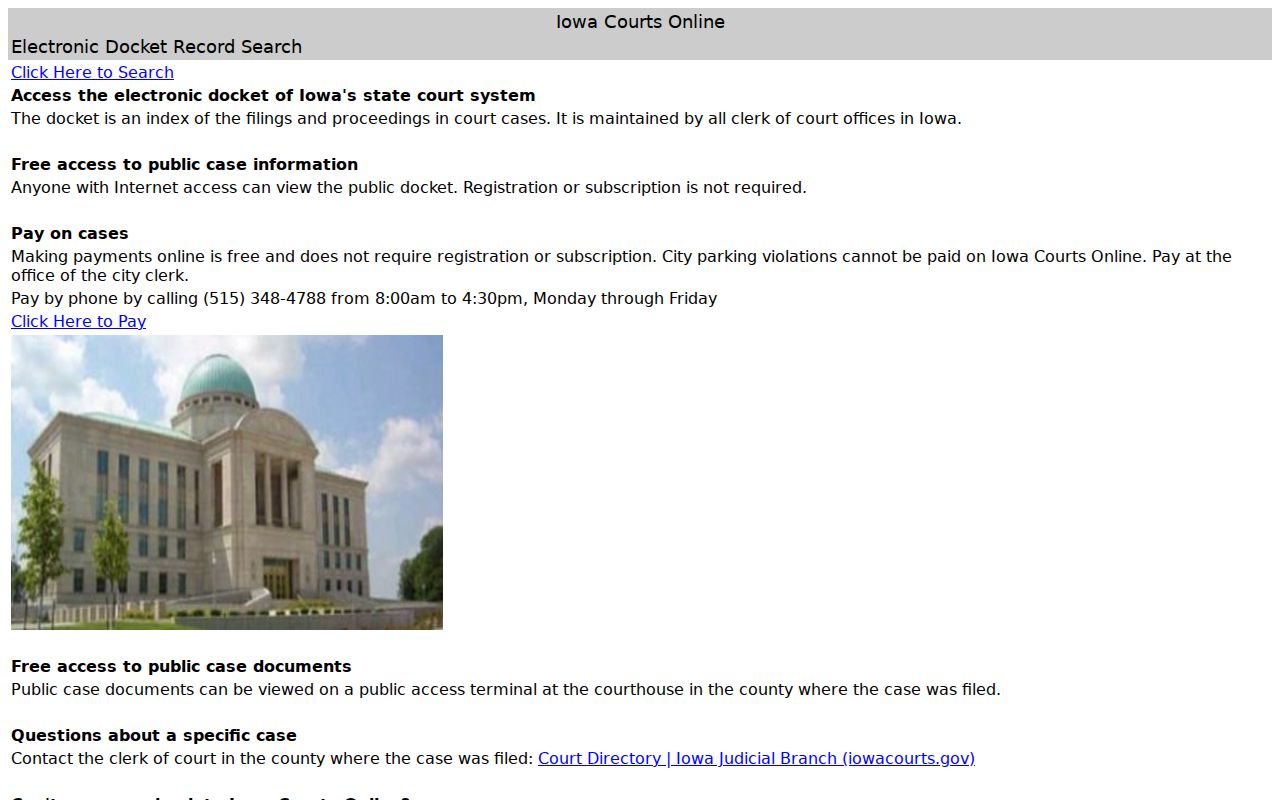
What you see is a court index, not an active-warrant roster. It can guide a call, but the Muscatine County Clerk or the issuing agency must confirm current status.
Muscatine County Warrant Search Fields
The official search interface gives two routes. Search by name when no paper is at hand; a full case or citation number is more exact. Muscatine County offers no public warrant-number field.
| Field Label | Type | Required | Notes |
|---|---|---|---|
| First Name | Text | Name path | Two or more characters |
| Last Name | Text | Name path | Use the legal spelling |
| Case or Citation Number | Text | Number path | Full identifier is the best match |
| County | Selector | When prompted | Choose the filing county |
| Case Type | Selector | When prompted | Choose the known matter type |
The field screen shows how a Muscatine County warrant search can be narrowed.
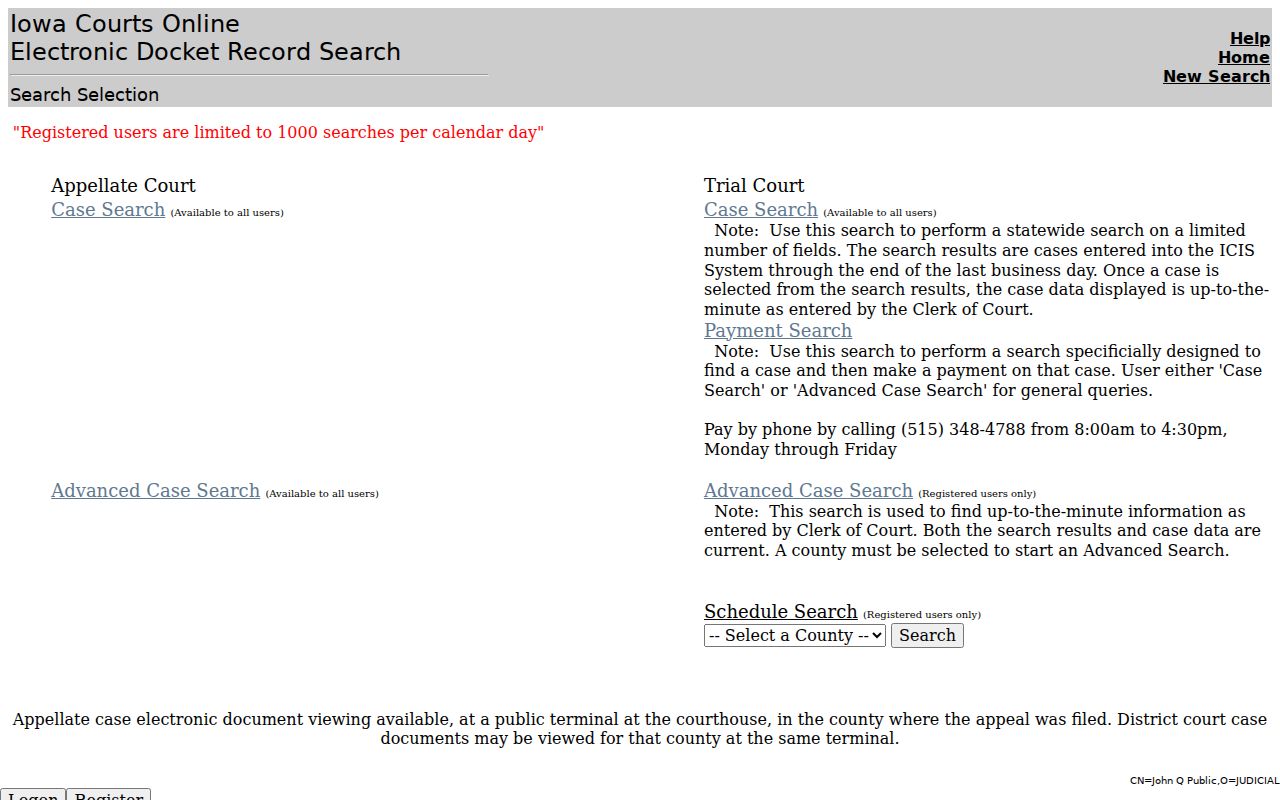
These controls locate court cases. They reach no internal law-enforcement system in Muscatine County, and they do not ask for a date of birth.
When a Muscatine County Warrant Search Is Blank
A blank result is not a legal all-clear. The case may sit in another county, a new citation may not have posted yet, or the spelling may differ, and some records are sealed or restricted. Warrant-securing material can also stay confidential before arrest and return or an initial appearance. Treat an empty Muscatine County search as unfinished, not final.
- Read the filing county and identifier on the citation or notice.
- Retry with the full number instead of broad name terms.
- Allow the official posting period if the citation is recent.
- Call the clerk shown on the paper, or the Muscatine County Clerk when Muscatine is the filing county.
Timing matters here. The Judicial Branch says an ordinary citation may take 10 to 14 days to post, while the ePayment screen warns some take 14 to 21 days. Keep your original paper, and do not read repeated blank screens in Muscatine County as a resolved case.
What a Muscatine County Warrant Search Returns
What comes back is a court index, not a warrant card. Dates and identifiers let the Clerk pull the right file. A schematic key like FECR012345 shows the kind of case identifier worth keeping for a Muscatine County call. It is a sample, not a real person record.
| Case or Citation ID | The key tied to the matter and filing county |
|---|---|
| Case Type and Filing Date | The category and opening date |
| Docket Events | Public filings, hearings, warrant language, or returns |
| Hearing Information | Settings that may explain a failure to appear |
| Financial Link | Public fine or court-debt entries when available |
| Release or Bond Entry | Public action after arrest or appearance when indexed |
The complaint or affidavit may not appear, since Iowa Code section 804.29 protects warrant-securing material at specified stages.
Muscatine County Warrant Search Payment Screen
The official ePayment search offers By Name and By Case or Citation Number routes. Fields cover first name, last name, partial citation or Case ID, county, and a full identifier path.
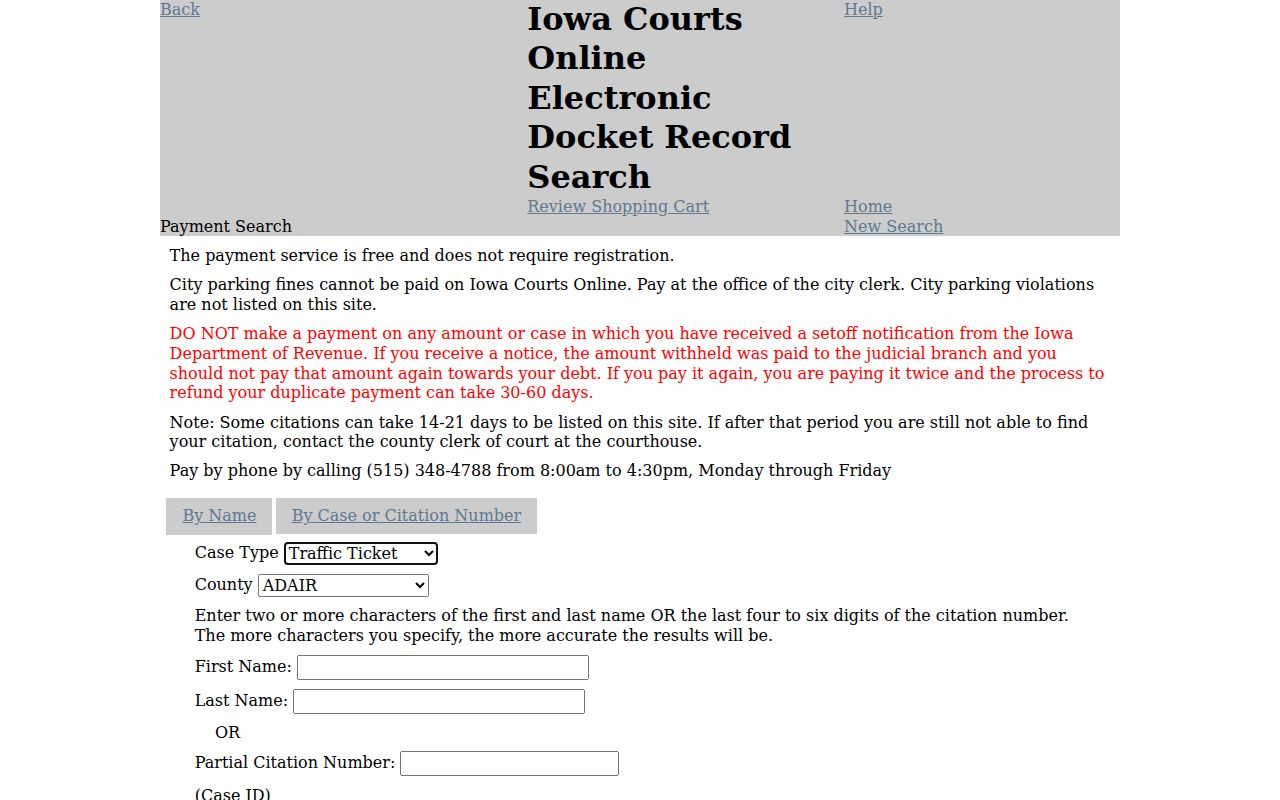
This screen finds a financial obligation. Paying it is not a court order that recalls every Muscatine County warrant, so ask the Clerk whether a missed appearance or other step remains. Keep the receipt.
Key point: A card receipt proves payment, but only the court can confirm whether a related warrant or appearance issue is resolved.
Where Muscatine County Warrants Are Checked
The Iowa District Court, Muscatine County, creates the court record. Its Clerk handles docket, filing-county, payment, terminal, and public-copy questions. Current law-enforcement status goes to the Sheriff or the issuing city police agency.
Clerk of the District Court
401 East 3rd Street, Muscatine, IA 52761
563-263-6511
Use for a specific docket entry, case, payment, or public document.
Muscatine County Sheriff
3600 Park Ave. W, Muscatine, IA 52761
563-263-6055
Use the non-emergency line for agency routing. No public warrant roster was located.
Iowa has no separate Muscatine municipal court. The 1973 Unified Trial Court Act folded municipal and justice-of-the-peace work into Iowa District Court, which covers Muscatine County cases.
Muscatine County Sheriff Contact Is a Fallback
The official Sheriff page lists contacts, office details, divisions, jail resources, and an app link. It posts no warrant name search, active-warrant table, downloadable roster, or most-wanted list for Muscatine County.
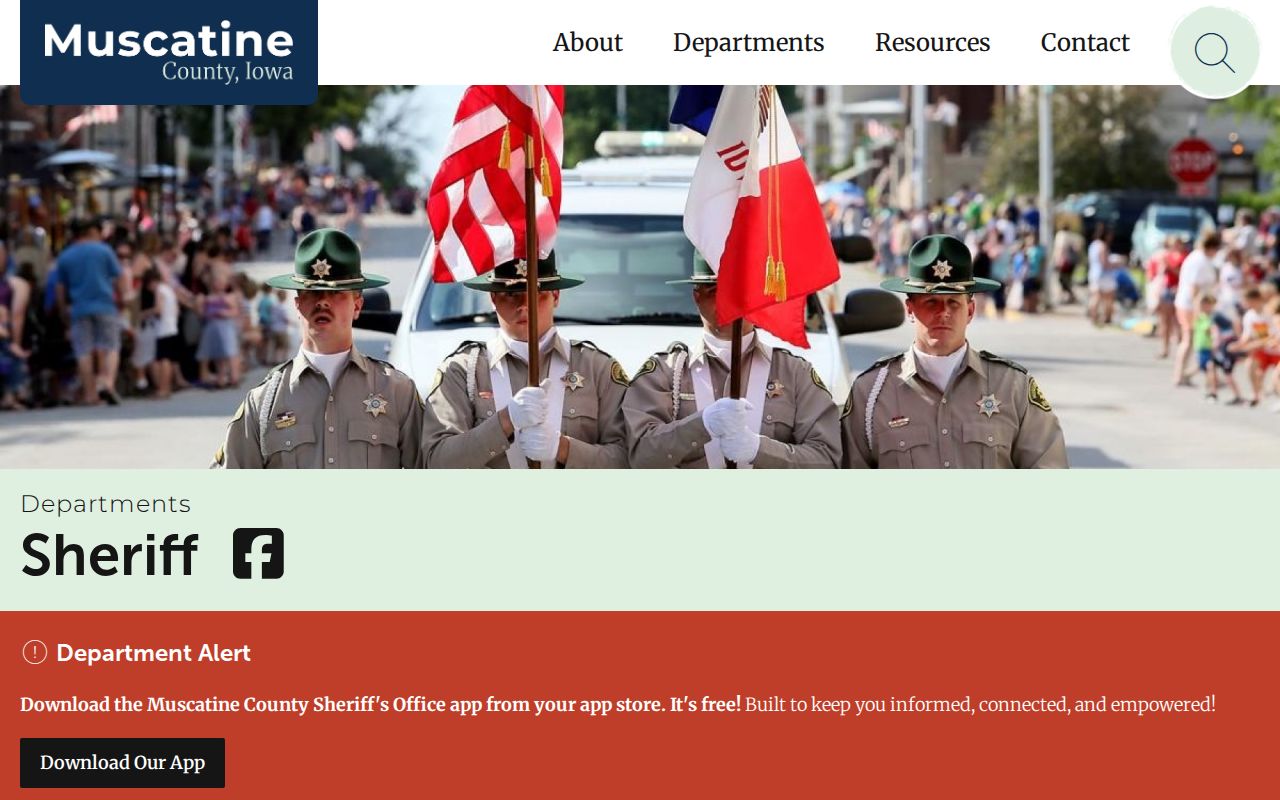
That gap is exactly why an unofficial list should never stand in for government confirmation. Check the docket first, then call the Muscatine County office with a focused question about its procedure. For a Muscatine Police record, the city directs requests to Police Administration. That channel does not replace the Clerk for a district-court record.
Access and Restricted Warrants
Iowa Code Chapter 22 generally allows inspection of public records, subject to lawful exceptions and reasonable procedures. A Muscatine County docket may be open while an affidavit, investigative record, juvenile case, or sealed document stays unavailable.
Key rules:
Section 804.29 can protect warrant-securing information until arrest and return or initial appearance.
Section 232.147 generally makes juvenile court records confidential.
Section 22.7 protects listed categories, including some investigative material.
A records custodian may steer you to self-service, charge allowed costs, state that no record exists, or withhold protected material under a cited rule. Ask Muscatine County offices which path applies.
Muscatine County Warrant Search Terms
Iowa sources use arrest warrant, bench warrant, and failure to appear; there is no public "capias" portal. Using the local terms helps the Muscatine County Clerk understand the question.
- Docket
- The clerk’s index of filings and proceedings.
- Failure to appear
- A missed required court date that may prompt court action.
- Return
- An officer’s report to court after service or execution.
- Initial appearance
- The first review after arrest, when charge and release issues are addressed.
- Recalled
- A warrant status that should be confirmed with the issuing court.
When you call the Muscatine County Clerk, quote the exact public entry you are asking about. Ask what the term actually marks. Is it a past event? An open obligation? Or a later action that changed the case? Dates matter here, since a docket can list issuance on one line and a return, appearance, or new setting farther down the record. Read the whole public chronology before picking up the phone. The courthouse terminal also helps when a document is indexed but not displayed online, and the Clerk can explain whether the terminal or the copy process is the right route. One caution for Muscatine County records. A request cannot bypass a seal, juvenile confidentiality, protected warrant material, or an ongoing-investigation restriction. And never email a Social Security number, completed payment-plan form, or sensitive identifier just to ask whether a case exists.